
Conservation Opportunities Abound in Missouri
On a rainy Thursday in August, we joined Lindsey Forbis with NRCS in Columbia, MO, Jenny Long from the Missouri NRCS State Office, and Jill Lucht from Missouri Rural Crisis Center (MRCC) at Abounding Acres, a 10-acre vegetable farm located in Ashland, Missouri. When farmers McKinley and Ashley Worley started out, they thought they would farm with livestock, but limited acreage and access to processors led them to vegetable production. Now that they are raising their family of four boys, specialty crop production also allows them to get away from the farm with their kids. With livestock, it was more challenging to spend time away from the farm.
Both McKinley and Ashley grew up on and surrounded by farms in Farmington, Missouri, and have a passion for agriculture. As McKinley says, “we moved [Abounding Acres] from a very expensive hobby to a sustainable business.” The couple wanted to live in a rural location, have a life lived outside, and raise their children knowing where their food comes from.
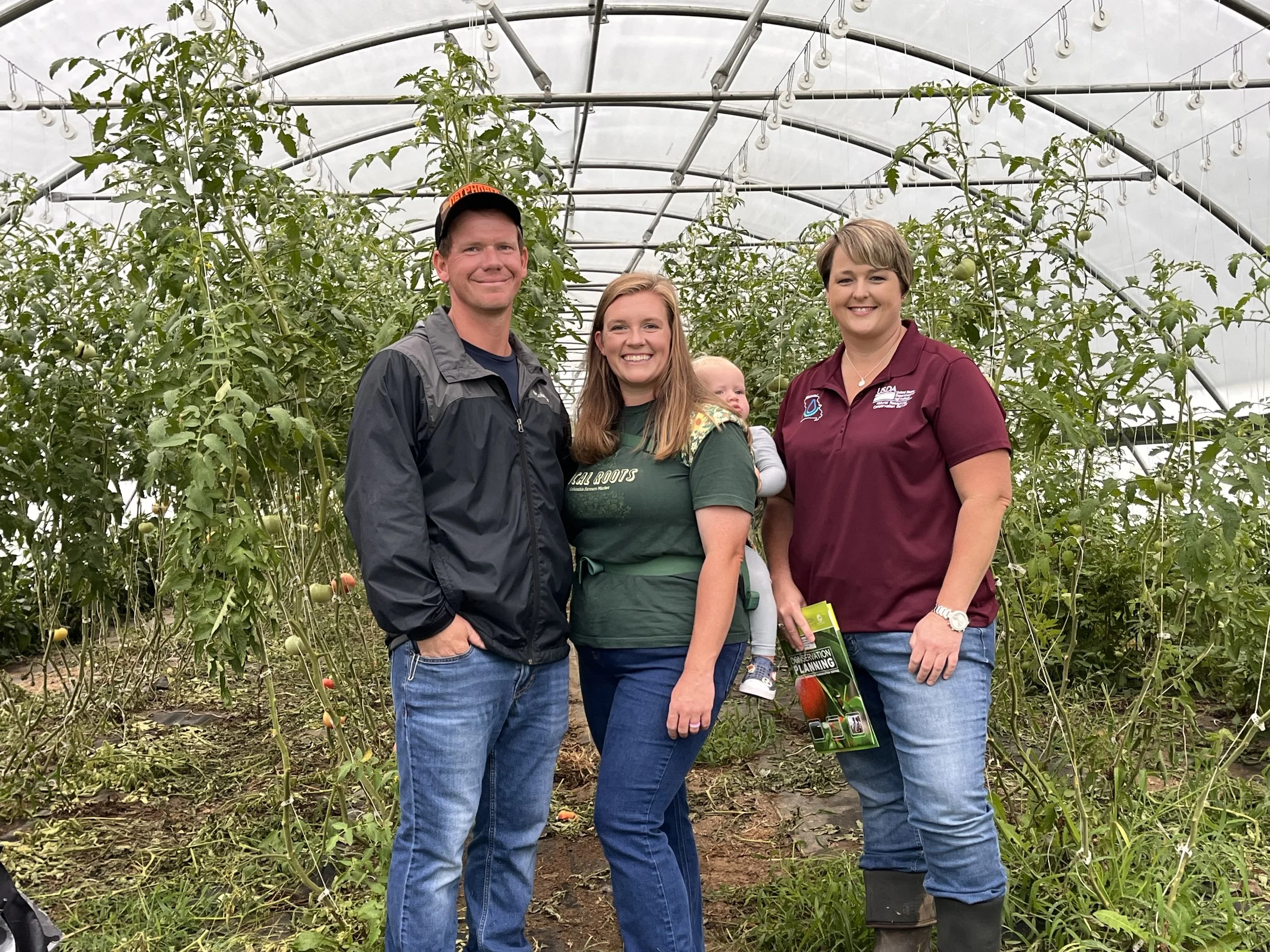
Both McKinley and Ashley grew up on and surrounded by farms in Farmington, Missouri, and have a passion for agriculture. As McKinley says, “we moved [Abounding Acres] from a very expensive hobby to a sustainable business.” The couple wanted to live in a rural location, have a life lived outside, and raise their children knowing where their food comes from.
Recently they got the news that they received an NRCS EQIP contract. The Environmental Quality Incentives Program (EQIP) is the flagship conservation program of the Natural Resources Conservation Service (NRCS), which helps agricultural producers and private landowners integrate conservation into their operations while improving productivity and environmental quality. EQIP supports conservation practices that enhance soil health, water and air quality, and wildlife habitat, while also helping producers adapt to drought and increasing weather volatility.
When you ask McKinley how the process began, he draws a straight line to “a push” from Jill Lucht. Jill is the Conservation Outreach Coordinator at the Missouri Rural Crisis Center and part of the Midwest Agriculture Conservation Network. He always wanted to apply, but, as McKinley says, “you get busy” and can be unsure of the process. Jill came out and did the initial farm visit along with Neil Monnig, Urban Ag and Small Farm Program Manager with Boone County Soil and Water Conservation District. Together, Jill and Neil provided insights into the program and what could be done on the farm. That was the catalyst to reach out to Lindsey Forbis, Resource Conservationist with NRCS, and get the process started. McKinley found the process fairly simple. He met with Lindsey, who helped him identify Resource Concerns and establish a “wish list” of practices that would address those concerns.
The Worley’s started out small with their first high tunnel in 2021 and later added caterpillar tunnels and a nursery. The new EQIP contract will take things to the next level. Their contract includes an additional four 30’ x 96’ High Tunnel Systems, and a well and irrigation system that will supply crops in both the high tunnels and field plots. Additional practices include micro-irrigation, mulching, critical area planting and nutrient and pest management practices.
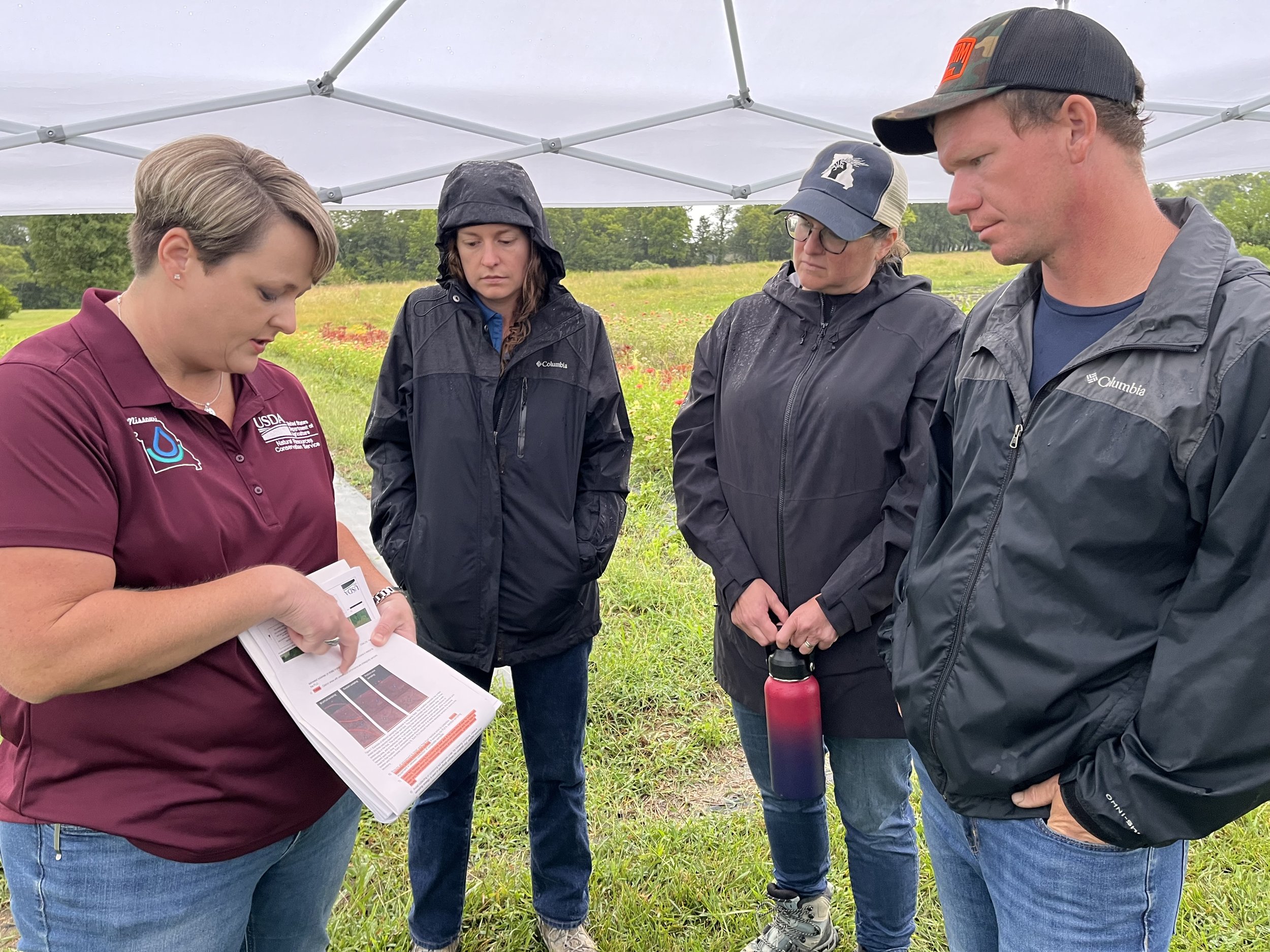
McKinley is “super grateful and ecstatic” to be able to implement this comprehensive suite of practices. A main motivator for the Worley’s EQIP contract is reducing disease and pest pressure that can happen in high tunnels, while also improving soil fertility. These positive outcomes are made possible by crop rotations. The farm became certified organic in 2025, and McKinley cites a strong community of support and increased appreciation of systems-thinking in agriculture with that change. “An important part of stewardship and certification is having crop rotations that are spaced out so we don't have to rely on outside inputs” he says.
With the addition of more high tunnels, their protected growing space will increase from 12,000 to 25,000 square feet, with which the Worley’s expect increased sustainability and profitability. “The demand for local produce during the winter is high,” says McKinley, and the contract will allow them to rotate greens, add February plantings ready for March or April, and then grow summer vegetable crops. In addition to the profit potential, the larger high tunnels are sturdier to help protect against wind damage, and allow for trellising and automation such as raising and lowering the tunnel sides from afar with a cell phone app.
One of the key components to obtaining a conservation plan and an EQIP contract is working with great NRCS staff like Lindsey Forbis. While Lindsey got her start with artificial insemination (the original AI) in cattle, she happened upon a contract employee position in Iowa for NRCS and began her NRCS career as a clerical specialist. She didn’t know a lot about the agency before she started but after getting to know more about what NRCS does, and learning about all the conservation activities, she fell in love with the agency and knew she wanted to make her career there.
Once a permanent position with NRCS opened up, Lindsey was hired as a Soil Conservation Technician in southern Iowa–designing ponds, terrace systems and grassed waterways to address ephemeral and deep gully erosion. Later, she had an opportunity to become a Resource Conservationist in Nebraska. Focusing on resource conservation is what ultimately brought Lindsey back to Missouri where she focuses on providing technical and financial assistance to producers and landowners through the EQIP or Conservation Stewardship Program (CSP). The latter program is similar to EQIP but allows producers to take their conservation to a higher level. Lindsey especially enjoys getting to work with producers who are eager to put conservation on the land and assist them in identifying ways they can improve their land. “It’s great to work with these forward thinkers,” says Lindsey, who loves watching the implementation come to fruition.
We appreciate farmers like the Worley’s and the staff at NRCS who partner to improve natural resources and farm viability on the land. Due to changes in federal policy last year, the funding for conservation will increase in 2027, providing more opportunities for farmers and private landowners to implement best practices that benefit their operations and their communities through clean water and other environmental benefits.
Learn more about USDA NRCS conservation programs here. See where the Midwest Agriculture Conservation Network works and connect with a Coordinator in your state here.
